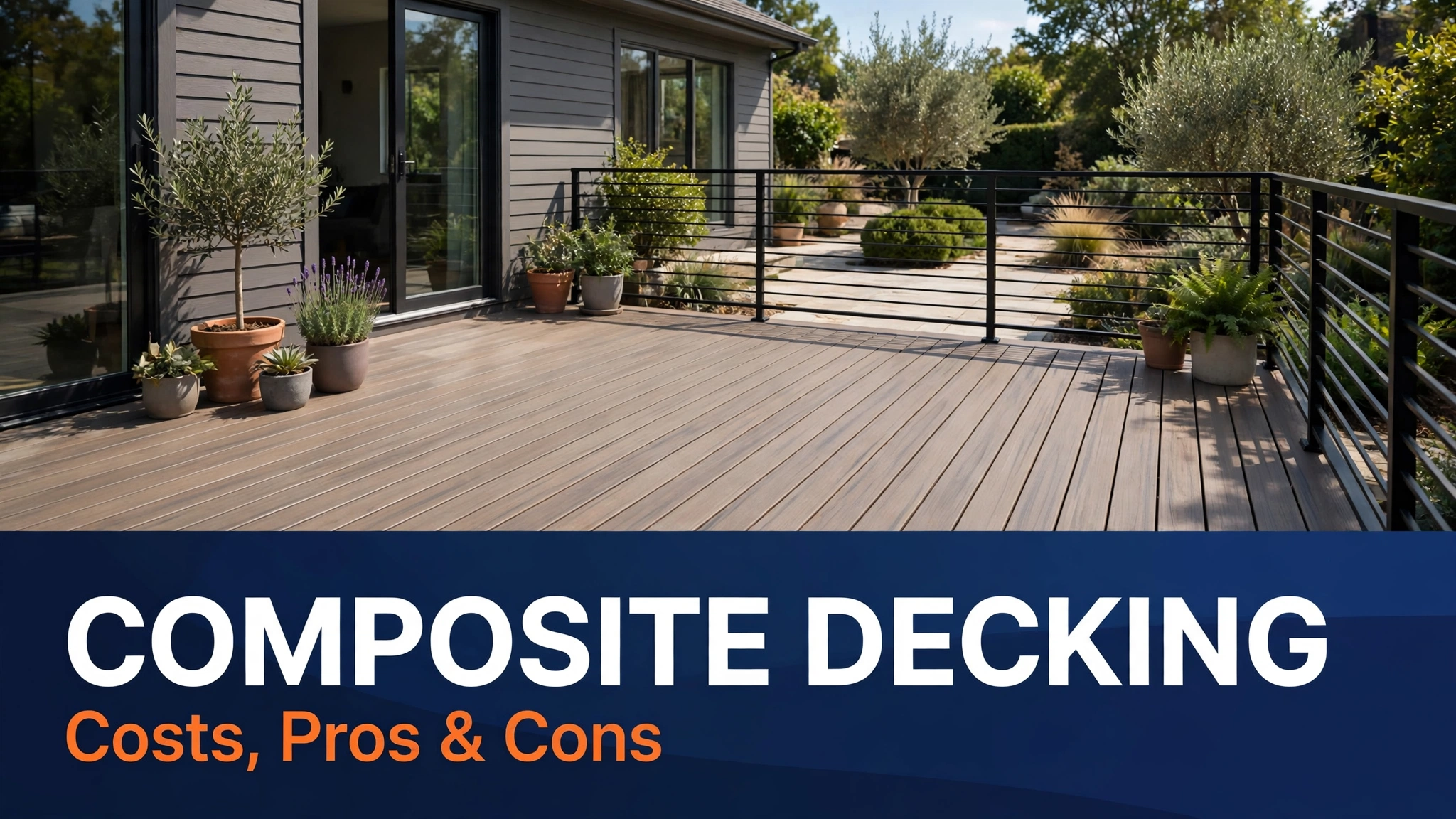
Your wood deck is splitting, graying, and eating a weekend every spring — and you are wondering whether composite decking is the answer. Here is the short verdict: composite decking is worth the premium if you hate maintenance and plan to stay in your home at least five years, but it is the wrong buy on a tight budget or if you love the look and feel of real wood.
This guide gives you the real numbers: what it costs per square foot by brand tier, how long it actually lasts, the hidden costs nobody puts in the quote, and the installation mistakes that void warranties. By the end, you will know exactly which board to buy — or whether to stick with wood.
Table of Contents
At a Glance: Is It Right for Your Home?
Use this quick decision table before you price a single board. If two or more rows point to wood, save your money — composite decking only pays off when it matches how you actually use the deck.
| Your situation | Verdict | Why |
|---|---|---|
| Your deck gets full sun and heavy foot traffic | Buy capped boards | The polymer cap resists fading and stains; no splinters under bare feet. |
| You grill on the deck every weekend | Buy capped boards | Grease wipes off a capped board; it soaks into uncapped boards and wood. |
| Your budget is under $15 per square foot installed | Stick with pressure-treated wood | It costs about 30% more than pressure-treated pine upfront. |
| You love the look of real wood grain | Buy premium capped — or wood | Top-tier boards mimic tropical hardwood well, but up close they still feel like plastic. |
How Much Does Composite Decking Cost?
Materials are only half the story. A 300-square-foot deck runs $2,500–$5,000 in materials for a DIY build, or $7,500–$13,500 professionally installed. The board tier you choose moves the price more than anything else, so start there.
| Board tier | Materials per sq ft | 300 sq ft materials | Installed total |
|---|---|---|---|
| Basic uncapped | $4–$5 | $1,200–$1,500 | $7,500–$9,000 |
| Mid-range capped | $5–$9 | $1,500–$2,700 | $9,000–$11,000 |
| Premium capped | $9–$13 | $2,700–$3,900 | $11,000–$13,500 |
| PVC (all-plastic) | $10–$15 | $3,000–$4,500 | $12,000–$15,000 |
| Item | DIY | Pro |
|---|---|---|
| Boards | $2,100 | $2,100 |
| Hidden fasteners | $300 | $300 |
| Fascia + railing | $600 | $900 |
| Labor | $0 | $4,500 |
| Permit | $250 | $250 |
| TOTAL | $3,250 | $8,050 |
| Time | 3–5 weekends | 3–5 days |
One detail only someone who has built one will tell you: order 10% extra boards. Boards come in fixed lengths, and the picture-frame border most homeowners want eats two extra boards per side — plus every cut around a post or stair is a board you cannot reuse elsewhere.
Capped vs Uncapped Composite Decking
Every composite decking board is wood fiber mixed with recycled plastic, heated, and extruded. The difference between cheap and premium boards is the cap: a thin polymer shell wrapped around the outside that seals the wood fiber away from water, grease, and sun.
Uncapped boards cost $1–$2 less per square foot, but they stain. A dropped burger, a spilled glass of red wine, sunscreen on bare feet — all leave marks on uncapped boards that no amount of scrubbing fully removes. Capped boards wipe clean with soap and water. If your deck sees food, kids, or pets, capped is the only sensible choice.
Brands Compared: Trex vs TimberTech vs Fiberon
Four brands dominate US shelves. Trex is the biggest name and the easiest to find at Home Depot and Lowe’s; its Transcend line is the benchmark for capped boards. TimberTech (AZEK) wins on realism at the premium end, and its all-PVC AZEK line contains no wood fiber at all, so it cannot swell or mold. Fiberon competes on price with solid mid-range boards.
| Brand / line | Best for | Price per sq ft | Fade & stain warranty |
|---|---|---|---|
| Trex Transcend | Widest colors, easy availability | $9–$13 | 25-year |
| Trex Select / Enhance | Budget capped boards | $5–$8 | 25-year |
| TimberTech AZEK (PVC) | Wet or shaded areas | $10–$15 | 50-year |
| TimberTech PRO | Most realistic wood look | $8–$12 | 30-year |
| Fiberon Good Life | Value mid-range | $5–$8 | 25-year |
Do not buy a brand your local lumberyard does not stock — matching fascia, railing, and stair treads all come from the same manufacturer, and a board you cannot get in six months is a repair you cannot make.
Specs That Actually Matter
| Spec | Standard | Why it matters |
|---|---|---|
| Board width | 5.5 in (some 5 in budget lines) | Wider boards mean fewer seams |
| Joist spacing | 16 in on center; 12 in for diagonal | Wider spacing causes sagging |
| Expansion gap | 1/8–1/4 in at butt ends | Boards grow in summer heat, shrink in cold |
| Warranty | 25-year to limited lifetime | Fade and stain coverage varies by tier |
The number that trips up first-time builders is joist spacing. Boards sag if joists are more than 16 inches apart, and diagonal patterns need 12 inches. If your existing frame is 24 inches on center — common on older wood decks — you must add joists before laying a single board.
The Hidden Costs Nobody Puts in the Quote
The per-square-foot board price is the teaser. Hidden fasteners add $1–$1.25 per square foot. Matching fascia boards run $2–$4 per linear foot and are easy to forget until the deck edge looks unfinished. A picture-frame border wastes 10–15% more board. And if your old frame needs sistered joists or new footings, add $500–$2,000 before the first board goes down.
Pros and Cons
Pros
- No sanding, staining, or sealing — a soap-and-water wash twice a year is the whole routine
- No rot, termites, warping, or splinters
- 25-year to lifetime warranties; boards last 25–30 years
- High recycled content — Trex boards are up to 95% recycled material
- Longer boards (up to 20 ft) mean fewer end joints
Cons
- 30%+ higher upfront cost than pressure-treated wood
- Gets hot underfoot in dark colors — lighter colors stay cooler
- Scratches cannot be sanded out (they do blend in over time)
- Cannot be refinished or repainted like wood
Installing It Right: 5 Rules That Protect Your Warranty
- Keep joists at 16 inches on center (12 inches for diagonal layouts).
- Leave the manufacturer’s butt-end gap — boards expand in summer heat and buckle if they have nowhere to go.
- Keep screws 3/4 inch from board ends and edges; the material crumbles when fastened too close.
- Use screws made for composites — standard bugle-head screws bubble the surface. Cutting boards to length is cleaner with the right saw — see our guide to choosing the right circular saw, and a jigsaw handles notches around posts.
- Ventilate underneath — at least 6 inches of airflow below the deck, or trapped moisture voids the warranty.
The hands-on detail that saves the most callbacks: pre-drill and use the manufacturer’s hidden-fastener clips on grooved boards. Face-screwing is faster, but every visible screw head is a future rust spot. And before you drive the first fastener, check your drill — a good cordless drill with a clutch you can actually set low is the difference between a flush screw and a mushroomed board.
Maintenance: What It Really Takes
Maintenance is the whole reason to buy this material, and it is genuinely light: sweep weekly, wash with soap and water twice a year, and clean grease or food spills the same day. Never use a pressure washer above 1,500 PSI — it etches the cap and voids most warranties. Tannin stains from the wood fiber fade on their own in a few weeks of sun, and a composite-safe deck cleaner handles anything stubborn. That is the entire maintenance schedule.
When to Call a Pro — and When to Stop
Call a Pro If
- The deck is second-story or higher
- The framing is rotted, undersized, or bouncing underfoot
- You need a permit and structural drawings
- The deck attaches to the house with a ledger board you have not inspected
Stop and Reassess If
- Joists bounce when you walk on them
- The ledger board is pulling away from the house
- Posts are sitting on bare soil instead of concrete footings
Those are structural problems no decking material fixes — fix the structure first, then choose your boards.
Composite Decking FAQs
How much does composite decking cost per square foot?
Materials run $4–$13 per square foot depending on tier, and a professionally installed deck typically totals $25–$45 per square foot including labor, fasteners, fascia, and permit. A 300-square-foot mid-range deck costs roughly $8,000–$11,000 installed, or $3,000–$5,000 as a DIY project.
How long does composite decking last?
Most composite decking lasts 25–30 years, backed by 25-year to limited-lifetime warranties. Capped boards hold their color and resist stains far longer than early uncapped boards, which is why the cap is worth paying for.
What are the disadvantages of composite decking?
The main downsides are the higher upfront cost, heat buildup in dark colors, scratches that cannot be sanded out, and the fact that it cannot be refinished like wood. It is also heavier than wood, so older framing may need reinforcement before installation.
Is composite decking worth it vs wood?
Yes, if you plan to stay in the home at least five years and hate maintenance — the money saved on staining and repairs roughly repays the premium in that time. If your budget is tight or you love real wood, pressure-treated pine is the smarter buy.
Does composite decking get hot in the sun?
Yes — dark boards can reach 150°F or more in direct summer sun, hot enough to be uncomfortable barefoot. Lighter colors and deeper-grooved boards stay noticeably cooler, and some premium lines now include heat-mitigating technology. For a deeper dive into board materials and prices, see the This Old House composite decking guide.
Final Thoughts
Composite decking is not a magic material — it is a trade. You pay more upfront and give up the feel of real wood; in return you get a deck that asks for almost nothing for 25 years. Buy capped boards from a major brand, respect the joist spacing, and budget for the fasteners and fascia. Do that, and the only thing you will be doing on your deck is sitting on it.