Learning how to clean HVAC vents is one of the simplest ways to freshen the air in your home. Dust, pet hair, and everyday debris collect on vent covers and just inside the duct openings, and every time your system runs, some of that buildup gets pushed back into your rooms.
The good news is that you do not need special equipment or professional training for this job. With a vacuum, a screwdriver, and about an hour, you can clean every accessible vent in an average home and notice the difference right away.
Table of Contents
Why Cleaning Your Vents Matters
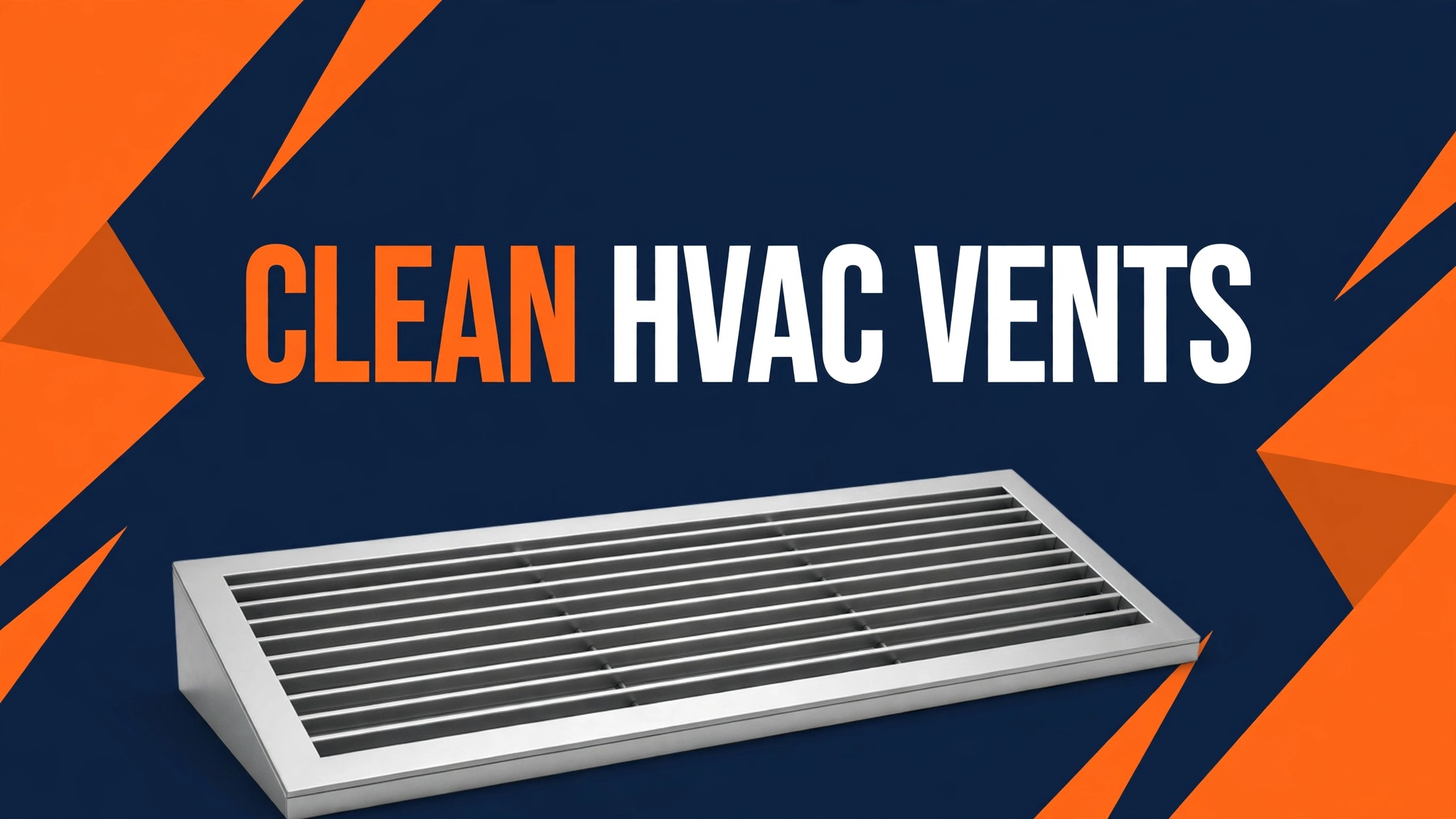
Your vents are the last stop before heated or cooled air enters each room. When their grilles are coated in dust, airflow drops, your system works harder, and more particles circulate through your home. Learning how to clean HVAC vents will not fix a dirty duct system deep inside your walls, but it does remove the visible buildup that affects the rooms you live in.
Learning how to clean HVAC vents also makes it easier to spot real problems early. A grille with dark staining, a musty smell, or debris that returns within days can point to a filter issue, a duct leak, or moisture that deserves attention before it gets worse.
Pair this job with other seasonal tasks in our guide to prepare your HVAC system for winter.
Signs Your Vents Need Cleaning
You do not need to guess when it is time to learn how to clean HVAC vents. Visible dust caked on the grille slats is the most obvious sign that you should learn how to clean HVAC vents, especially on return vents that pull air back toward your system. A stale or musty smell when the system starts up is another clue, as is a thin layer of dust settling on furniture soon after you have cleaned.
Weak airflow from one or two vents, while others blow normally, can also mean a grille is clogged. If you have pets, live near a busy road, or recently finished a renovation, learning how to clean HVAC vents more often helps, since all three fill them with dust faster than usual. That is why knowing how to clean HVAC vents on a regular schedule is worth the effort.
What You Will Need
- Vacuum cleaner with a hose and brush attachment
- Flathead and Phillips screwdrivers
- Microfiber cloths and a bucket of warm, soapy water
- Soft brush or old toothbrush for grille slats
- Dust mask and work gloves
- Replacement furnace filter (check your system size first)
- Flashlight for peeking inside duct openings
Gather everything before you start. Walking away mid-job with vent covers off invites dust to fall straight into open ducts, which defeats the purpose of the cleaning.
Safety First
Turn your HVAC system off at the thermostat before you learn how to clean HVAC vents and remove any vent covers. This keeps the fan from blowing loosened dust into the room while you learn how to clean HVAC vents, and it protects you from moving parts near the blower compartment. If you have allergies or asthma, wear a dust mask and gloves throughout the job.
Never reach deep into ductwork, and never use harsh chemicals, bleach, or a pressure washer inside vents or ducts. You are cleaning covers and the first few inches of duct opening only. Anything deeper, damaged, or moldy belongs to a professional.
While you are working near the system, it is also worth checking that your condensate drain is clear — see our guide to clean your HVAC condensate drain.
How to Clean HVAC Vents Step by Step
Work through one room at a time so no vent cover gets mixed up with another. Covers vary in size, and swapping them can leave gaps that leak air. This method for how to clean HVAC vents keeps the job tidy and fast.
Step 1: Turn Off the System
Set the thermostat to off, not just to a mild temperature, as the first step in learning how to clean HVAC vents. Confirm the system is silent before you touch any cover. This single step prevents dust from circulating while you learn how to clean HVAC vents and keeps the job from fighting against running airflow.
Step 2: Remove the Vent Covers
Unscrew wall and ceiling covers and set the screws in a small cup so none go missing. Floor registers usually lift straight out. Label each cover with painter’s tape if several rooms share the same size, and note which vents are supply vents and which are returns.
Step 3: Vacuum the Duct Openings
Push the vacuum hose a few inches into each duct opening and vacuum all sides you can reach, as you learn how to clean HVAC vents. Use the brush attachment to loosen dust clinging to the metal. Work slowly when learning how to clean HVAC vents and do not force the hose around bends, since a stuck hose or a lost attachment turns a simple job into a repair call.
Step 4: Wash the Vent Covers
Soak metal and plastic covers in warm, soapy water for 10 to 15 minutes, then scrub the slats with a soft brush. Rinse them well and dry them completely before reinstalling. For painted or wooden covers, wipe them with a damp cloth instead of soaking, so the finish does not peel or warp.
Step 5: Wipe Inside the Opening
Dampen a microfiber cloth and wipe the inside of each duct opening as far as your hand comfortably reaches, when learning how to clean HVAC vents. This catches the fine film that vacuuming leaves behind. Rinse the cloth often, and switch to a clean one when it stops picking up dust, which is a simple habit to keep while learning how to clean HVAC vents.
Step 6: Clean the Wall and Floor Around Each Vent
Dust rings collect on the wall or floor surrounding every vent. Wipe that area now, while the cover is off, so the first blast of air does not blow it straight back onto a clean grille. Check for cracked caulk or gaps around the vent frame and note any that need sealing later.
Step 7: Replace the Furnace Filter
A clean vent paired with a clogged filter will dirty up again fast. To replace the furnace filter, swap in a fresh filter, making sure the airflow arrow points toward the blower. If you are unsure which size or rating your system needs, check the old filter’s frame or your system’s manual before buying.
Step 8: Reinstall the Covers
Put each cover back in its original spot and tighten the screws snugly, without over-tightening and cracking the grille. Floor registers should sit flat, with no rocking or raised edges to catch feet or vacuum heads.
Step 9: Turn the System Back On and Check Airflow
Switch the system back on and walk from room to room. Air should feel even and steady at every vent, and there should be no rattling from a loose cover. If one vent still blows weakly, check that its damper is open and that furniture is not blocking it.
How Often Should You Clean HVAC Vents?
For most homes, learning how to clean HVAC vents once or twice a year is enough, ideally in spring and fall when you are already changing filters. Homes with pets, smokers, or allergy sufferers benefit from a quarterly wipe of the covers, even if a full wash is not needed every time.
Pair vent cleaning with your seasonal filter change. Clean vents and a fresh filter together keep dust levels low between deeper maintenance, and both jobs take under an hour combined.
Mistakes to Avoid
The most common mistake when learning how to clean HVAC vents is using a leaf blower or compressed air to blast dust out of vents. That pushes debris deeper into the ductwork and all over your home. Another is skipping the system-off step when learning how to clean HVAC vents, which circulates the very dust you are trying to remove.
Do not spray disinfectant or air freshener into open ducts either. Residues can irritate lungs and damage duct linings, and they mask smells that might signal a real problem. Clean with soap and water, and let a musty smell that persists after cleaning prompt a professional inspection.
When to Call a Professional
Some situations are beyond a DIY vent cleaning. Call a licensed HVAC technician if you see visible mold inside ducts, find signs of rodents or insects, or notice water stains around vents. The same applies if airflow stays weak after cleaning, or if your system short-cycles or makes new noises.
The U.S. Environmental Protection Agency advises that duct cleaning is best done as needed rather than routinely, and that any underlying cause, such as moisture or pests, must be fixed first or the problem will return. For that guidance, see the EPA’s duct cleaning guide.
Frequently Asked Questions
How long does it take to clean HVAC vents?
An average home with 10 to 15 vents takes about one hour, including washing and drying time for the covers. Larger homes or heavily soiled grilles can take closer to two hours. Working room by room keeps the job organized.
Can I clean HVAC vents without removing the covers?
You can vacuum and wipe the outside of the covers, which helps between deep cleanings. For a real result, though, remove the covers at least once a year so you can wash the slats and vacuum inside the duct openings where dust collects.
Does cleaning vents improve indoor air quality?
Cleaning vents removes the dust sitting on grilles and in duct openings, which reduces the particles blown into rooms. It is not a substitute for duct cleaning or for fixing moisture, mold, or filtration problems, but as part of regular maintenance it supports cleaner air.
Should I hire a professional to clean my vents?
Most homeowners can handle vent covers and duct openings themselves. Hire a professional for deep duct cleaning, mold, pests, or any work inside the air handler or blower compartment, where mistakes can damage the system or spread contaminants.
What is the difference between vents and ducts?
Vents are the grilles and registers you see on walls, floors, and ceilings. Ducts are the hidden passages behind them that carry air through your home. This guide covers the vents and the first few inches of duct opening, which is the part homeowners can safely reach.
Final Thoughts
Now that you know how to clean HVAC vents, add this job to your seasonal routine alongside filter changes. It costs almost nothing, takes about an hour, and leaves every room feeling fresher. Start with the dustiest room, work steadily through the house, and finish with a fresh filter for the best result.
If you found mold, pests, or weak airflow that cleaning did not fix, book a professional inspection rather than repeating the job. Clean vents are a great start, but a healthy HVAC system depends on the whole system working well together.