When the temperature drops and your heat pump blows lukewarm or cold air, learning how to fix a heat pump not heating is the fastest way to get comfortable again. A heat pump that runs but never warms the house is frustrating, but the cause is often simple: a wrong thermostat setting, a clogged filter, a tripped breaker, or a unit stuck in defrost mode. Most of these fixes take minutes and cost nothing.
This guide shows you how to fix a heat pump not heating with nine proven steps, in the order a technician would check them. You will learn which parts you can safely check yourself, and when it is time to call a professional. If you smell burning or see sparking wires, stop and call a technician right away.
Table of Contents
Why Is My Heat Pump Not Heating?
Before you learn how to fix a heat pump not heating, it helps to know what usually goes wrong. Heat pumps move heat instead of making it, so they are sensitive to airflow, refrigerant, and outdoor conditions in ways a gas furnace is not. The most common causes are a thermostat set to cool or fan-only, a dirty air filter, ice on the outdoor coil, a tripped breaker, or low refrigerant from a slow leak. Less often, the reversing valve sticks, or the defrost cycle fails and the outdoor unit freezes solid. The U.S. Department of Energy explains how heat pump systems work and when they are most efficient.
Cold weather itself can also fool you. Below about 30 degrees Fahrenheit, vent air may feel only mildly warm even when the system works correctly. A real problem shows up as cold air, a unit that never cycles off, or rooms that keep getting colder.
Before You Start: Safety Checks
Heat pumps combine high-voltage electricity with a pressurized refrigerant circuit, so respect the limits of a DIY repair. These limits are part of learning how to fix a heat pump not heating safely. Never open the sealed refrigerant lines, never bypass a safety switch, and never touch wiring inside the outdoor unit with the power on. If any step below feels outside your comfort zone, stop and book a technician.
Confirm the problem is real first. Set the thermostat to Heat, raise it five degrees above room temperature, and wait fifteen minutes. If the vent air is still cool or cold, work through the steps below.
Tools You Will Need
Most of these steps need no tools at all. Keep a flashlight, a garden hose, a soft brush, a replacement air filter in the correct size, and a clean cloth nearby. These are the only tools you need for how to fix a heat pump not heating at home. Do not buy refrigerant or gauges; handling refrigerant requires EPA certification and special equipment.
How to Fix a Heat Pump Not Heating: 9 Proven Steps
Work through these steps in order. Each one rules out a common cause, so do not skip ahead to the complicated checks before you have cleared the easy ones.
Step 1: Check the Thermostat Settings
The first step in how to fix a heat pump not heating is the one most people skip: look at the thermostat. Make sure the mode is set to Heat, not Cool, Fan, or Off. Check that the temperature setting is above the current room temperature and that the fan is set to Auto rather than On, since a fan set to On circulates unheated air between cycles.
If you have a programmable thermostat, check for a schedule or hold that is fighting your manual setting, and replace weak batteries.
Step 2: Check the Breakers and Power Switches
The second step in how to fix a heat pump not heating is confirming the system has power. A heat pump has two breakers: one for the indoor air handler and one for the outdoor unit. Open your electrical panel, look for a tripped breaker, and flip it fully off and back on. Also check the outdoor disconnect switch near the condenser and the emergency shutoff switch for the indoor unit.
If a breaker trips again right after you reset it, leave it off and call a technician; repeated resets can damage the compressor.
Step 3: Replace a Dirty Air Filter
A clogged filter is one of the most common reasons a heat pump stops heating, and it is the easiest fix of all. When airflow is restricted, the indoor coil cannot release heat into your home, the system strains, and the air from the vents feels cool. In how to fix a heat pump not heating, this step alone solves the problem more often than any other.
Pull the filter out and hold it up to a light. If you cannot see light through it, replace it with the exact size printed on the frame. In winter, check the filter monthly. Our guide on how to prepare your HVAC system for winter covers filter care as part of a full seasonal checklist.
Step 4: Clear the Outdoor Unit
The outdoor unit needs free airflow to pull heat from cold air. Walk outside and inspect it. Clear leaves, snow, ice, and debris from around the unit, leaving at least two feet of space on all sides and three feet above it. Trim back shrubs that press against the coil fins, and make sure the top fan grille is not blocked.
If the coil fins are matted with dirt, rinse them gently with a garden hose at low pressure. Clearing debris and dirt is a simple part of how to fix a heat pump not heating that many owners overlook. Never use a pressure washer; it bends the thin fins and makes airflow worse.
Step 5: Let the Defrost Cycle Finish
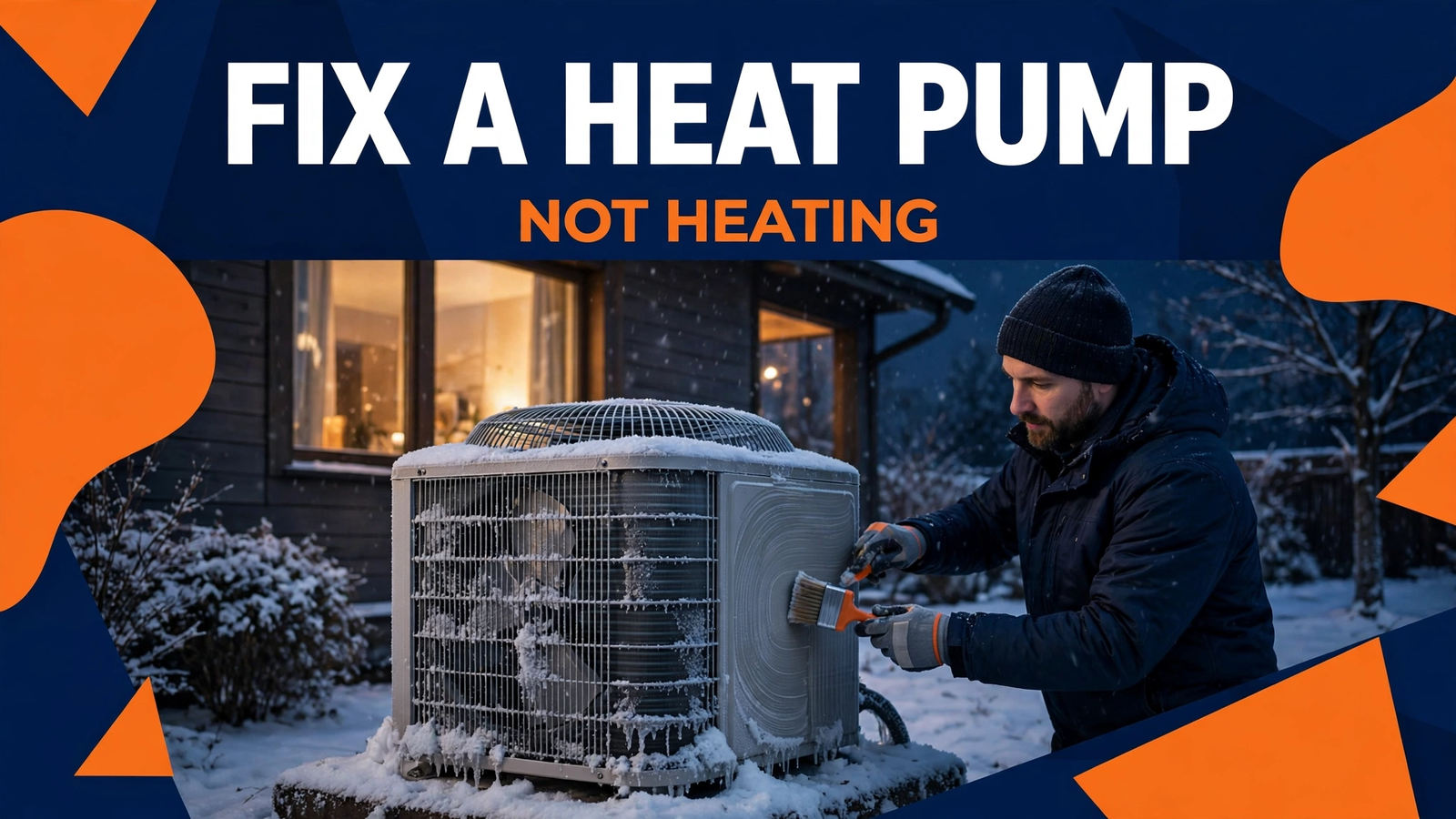
If the outdoor unit is coated in frost or ice, your heat pump may simply be in defrost mode. This is normal winter behavior: the system briefly reverses to melt ice off the outdoor coil, and during those few minutes it may blow cool air indoors. Steam rising from the outdoor unit during defrost is normal too, and it often worries homeowners who are learning how to fix a heat pump not heating for the first time.
Wait fifteen to twenty minutes and check again. If the ice melts and warm air returns, the system was working correctly. If the coil stays frozen solid after several hours, the defrost controls or sensor may have failed. Never chip ice off the coil; you will puncture a refrigerant line.
Step 6: Check the Reversing Valve
The reversing valve is the part that switches your heat pump between heating and cooling. If it sticks in cooling mode, the system will blow cold air in winter even though everything else works. In how to fix a heat pump not heating, a stuck reversing valve is a likely suspect when the outdoor unit runs, the thermostat is correct, and the air is cold.
Test it: set the thermostat to Cool for a few minutes, feel the vent air, then switch back to Heat. If the air temperature does not change, the valve is probably stuck. Replacing it means opening the refrigerant circuit, so it needs a technician.
Step 7: Inspect the Indoor Coil and Drain
A dirty indoor coil has the same effect as a dirty filter: it blocks heat transfer. Open the air handler access panel and look at the indoor coil. If it is coated in dust, clean it gently with a soft brush and a no-rinse coil cleaner made for evaporator coils. In how to fix a heat pump not heating, this step matters most in homes that have gone years without a filter change. If the coil is frozen solid rather than just dirty, our guide on how to fix a frozen ac evaporator coil explains how to thaw it safely.
While the panel is open, check the condensate drain line: a clogged drain can trip a safety float switch that shuts the system down. Clear standing water in the drain pan with a wet-dry vacuum at the outdoor outlet.
Step 8: Check for Refrigerant Problems
Low refrigerant is a common cause of weak heating, and it always means there is a leak somewhere. Signs include ice forming on the refrigerant lines or the indoor coil, a hissing sound near the outdoor unit, and a system that runs constantly without ever reaching the set temperature. In how to fix a heat pump not heating, refrigerant is the one step you should never attempt yourself.
If you suspect a leak, turn the system off and call a licensed HVAC technician. Only a certified technician can legally handle refrigerant, repair the leak, and recharge the system correctly.
Step 9: Reset the System
If you have worked through the steps above and the system still is not heating, try a full reset. Turn the thermostat to Off, then switch off both breakers for the indoor and outdoor units. Wait five minutes, then restore power to the outdoor unit first, then the indoor unit, and set the thermostat back to Heat. In how to fix a heat pump not heating, a reset clears temporary control-board faults and lockouts that can follow a power flicker or a defrost error.
Give the system twenty minutes before you judge the result. If warm air returns, the fault is cleared. If the problem comes back within a day, have a technician diagnose it before it becomes a no-heat emergency.
When to Call a Professional
Some problems are beyond a homeowner’s safe reach, so knowing how to fix a heat pump not heating also means knowing when to stop. Call an HVAC technician if you find a tripped breaker that keeps tripping, a stuck reversing valve, a refrigerant leak, a frozen coil that will not defrost, a burning smell, or any electrical damage such as scorched wires. Also call if the heat pump is more than fifteen years old and repairs keep stacking up; at that point, replacement often costs less than another season of breakdowns.
When you call, tell the technician exactly what you already checked. A clear description helps them arrive with the right parts and saves diagnostic time. If your backup furnace has a similar ignitor problem, our guide on how to replace a furnace ignitor explains that repair step by step.
How to Prevent Heat Pump Heating Problems
The best way to avoid needing to learn how to fix a heat pump not heating again is a little routine maintenance. Change the filter every one to three months, keep the outdoor unit clear of plants and snow, and rinse the outdoor coil each spring and fall. Schedule a professional tune-up every year before heating season; a technician will check refrigerant levels, test the defrost controls, clean both coils, and catch worn parts before they fail.
Never stack firewood or storage against the outdoor unit, and brush snow off the top after each storm so the fan can spin freely. Small habits like these keep a heat pump efficient for fifteen years or more.
Frequently Asked Questions
Why is my heat pump running but not heating?
The most common reasons are a thermostat set to cool or fan-only, a dirty air filter, ice on the outdoor coil, or a tripped breaker. Work through the nine steps in this guide: most homeowners who learn how to fix a heat pump not heating find the problem in the first three steps, and the fix costs nothing.
Is it normal for a heat pump to blow cool air in winter?
Yes, sometimes, and this is the detail that confuses most people learning how to fix a heat pump not heating. Heat pumps deliver air around 90 to 100 degrees Fahrenheit, which can feel cool on your skin. The system is working if the air is warmer than the room and the house slowly reaches the set temperature. Air colder than the room means something is wrong.
Can I fix a heat pump not heating myself?
Most homeowners can handle how to fix a heat pump not heating for the simple causes: thermostat settings, breakers, filters, debris, and defrost cycles. Leave refrigerant work, reversing valve replacement, and any electrical repair inside the unit to a licensed HVAC technician.
How long should a heat pump take to warm a house?
A healthy heat pump raises indoor temperature by one to two degrees per hour in cold weather. If you are learning how to fix a heat pump not heating, slow warming alone is not proof of failure. If your house has not warmed at all after two hours, check the filter, the outdoor unit, and the thermostat settings first.
Should I use emergency heat?
Emergency heat switches your system to electric resistance heating, which warms the house but costs far more to run. Use it only as a temporary backup when the heat pump itself has failed and you are waiting for a repair. If you need emergency heat often, have the heat pump serviced. A homeowner who knows how to fix a heat pump not heating still calls a technician when emergency heat becomes a regular need.
Final Thoughts
Now you know how to fix a heat pump not heating, from the thermostat check to the full system reset. Most problems turn out to be a setting, a filter, or a little ice, and you can fix those in minutes without spending anything. Keep up with filter changes and annual maintenance for reliable warmth all winter. If the nine steps did not solve it, a licensed technician can test the refrigerant circuit and controls safely.