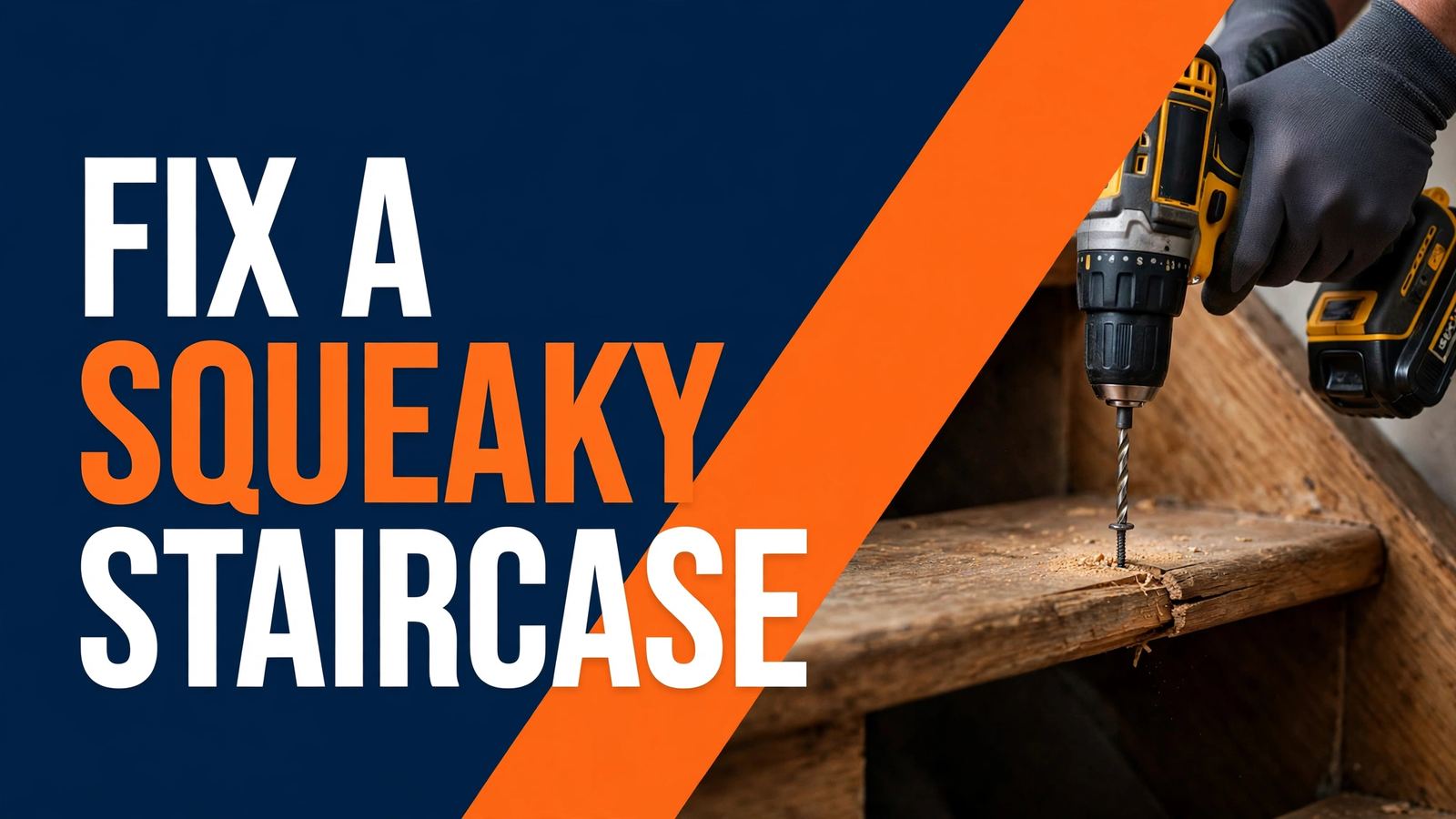
Nothing ruins a quiet house faster than a staircase that announces every step. If you want to know how to fix a squeaky staircase, most creaks are simple friction problems you can solve in an afternoon with basic tools.
A squeak happens when two pieces of wood rub together, or when a nail works loose and shifts underfoot. Once you find the exact spot, a screw, a shim, or a little glue usually fixes it. This guide shows you how to fix a squeaky staircase from above, from underneath, and even through carpet, so you can pick the method that fits your stairs.
Table of Contents
Why Do Stairs Squeak in the First Place?
Wooden stairs are built from treads, risers, and stringers nailed or glued together. Over time, seasonal humidity changes make the wood shrink and swell, the nails loosen, the glue bonds break, and tiny gaps open up. Every time you step on a loose tread, it flexes a fraction of an inch and rubs against the riser or stringer beside it — that rubbing is the squeak. The problem is almost never structural, but it only gets louder if you ignore it. Knowing how to fix a squeaky staircase starts here: something that should be tight has come loose.
Tools and Materials You’ll Need
Before you learn how to fix a squeaky staircase, gather everything so you are not running to the hardware store halfway through.
You will need a cordless drill, a stud finder, a hammer, wood shims, wood glue or subfloor adhesive, 2-inch and 2-1/2-inch screws, finishing nails, matching wood filler, powdered graphite or talcum powder, and a pencil. If your stairs are carpeted, add a squeaky-stair repair kit with snap-off screws.
Step 1 — Find the Exact Squeaky Step
Walk slowly up and down, stepping on the front, middle, and back of every tread, and mark each squeaky step with painter’s tape.
Stand on a marked step and rock gently side to side, then forward and backward. A squeak at the front usually means the tread has pulled away from the riser; at the back or side, it points to a loose connection with the stringer, the angled board that supports the steps. Note which steps squeak and where — that map is the foundation of how to fix a squeaky staircase without wasting screws on solid steps.
Step 2 — Try the Quick Lubricant Fix First
Sometimes the fastest way to learn how to fix a squeaky staircase is the simplest one: if the squeak is mild and the step feels solid, try a dry lubricant first.
Sprinkle powdered graphite or talcum powder into the seam where the tread meets the riser, then work it in by stepping on the tread a few times. The fine powder coats the rubbing surfaces and often silences a light squeak right away. Skip oil-based lubricants: they stain wood, attract dust, and leave surfaces slippery. If the squeak returns, move on to the screw and shim methods below for a permanent fix.
How to Fix a Squeaky Staircase From Above
When you can see the top of the treads, fixing from above is the most direct approach. It works best on bare wood stairs and on stairs you plan to refinish or recarpet anyway.
Step 3 — Screw the Tread to the Riser
Drill three pilot holes across the front of the squeaky tread, where it meets the riser below. Angle the drill so the screws bite into the riser, then drive in 2-inch screws and sink the heads just below the surface. Fill each hole with matching wood filler, let it dry, and sand it smooth. This single step is the simplest version of how to fix a squeaky staircase from above: it pulls the tread tight against the riser again.
Step 4 — Screw the Tread to the Stringers
If the squeak comes from the sides or back, the tread has likely pulled away from the stringers. Drill pilot holes through the tread into each stringer underneath, then drive in 2-1/2-inch screws. Work from the top down so you are not standing on a step you have just repaired. Check each step by walking on it. In how to fix a squeaky staircase, the test is simple: a step that no longer moves under your weight will no longer squeak.
How to Fix a Squeaky Staircase From Underneath
If you can reach the underside of your stairs through a basement or a closet, this is the cleanest repair of all — you work out of sight, so there are no screw holes to fill on the finished side.
Step 5 — Glue and Shim the Gaps
Have a helper walk on the squeaky step while you watch from below — from here, how to fix a squeaky staircase is mostly a matter of filling the gap you can see flex. Spread wood glue on a thin shim and tap it gently into the gap between the tread and the riser, or the tread and the stringer. Do not force it too far in, or you can lift the tread and make things worse. Tap it snug, wipe away excess glue, and let it set — the shim fills the void, and the glue locks the joint so the boards can no longer rub.
Step 6 — Add Screws and Blocking
For a stronger repair, drive screws up through the stringer into the underside of the tread. You can also glue and screw a small wooden block into the corner where the tread meets the riser. This technique, called blocking, is a staple of how to fix a squeaky staircase from underneath: it braces the joint from below and stops the flex that causes the squeak. If the stringer has pulled away from the wall studs, drive screws through it into the studs. For a walkthrough with photos, see Family Handyman’s guide to repairing squeaky stairs.
How to Fix a Squeaky Staircase Through Carpet
Carpeted stairs hide the treads, but you can still fix a squeak without tearing up the carpet. A snap-off screw kit is the easiest answer to how to fix a squeaky staircase through carpet.
Step 7 — Use a Snap-Off Screw Kit
Find the squeak by bouncing on each carpeted step, just as on bare wood. Place the kit’s jig over the squeaky spot and drive a scored screw through the carpet, the tread, and into the stringer or riser below. The jig stops the screw head just below the tread’s surface. Then use the screw gripper to rock the screw back and forth until the scored shaft snaps off below the surface. The carpet fibers close over the tiny hole, and nothing shows. Repeat on every squeaky step, working your way up.
Step 8 — Silence Squeaks at the Balusters and Handrail
Not every stair noise comes from the treads. Sometimes the squeak is in the balusters — the vertical spindles — or the handrail itself. Press on each baluster and listen for movement. If one is loose, pull it out, add a dab of wood glue, and tap it back into place.
For a loose handrail, tighten the screws at the newel post and wall brackets. A handrail that flexes even slightly can creak loudly, so check the brackets before blaming the treads. The same principle applies here: find the loose joint, then glue, screw, or shim it tight.
Step 9 — Prevent Squeaks From Coming Back
Once your stairs are quiet, keep them that way. The biggest enemy is humidity change: wood shrinks in dry winter air and swells in humid summers. Keep indoor humidity between 35 and 50 percent, with a humidifier in winter and a dehumidifier in a damp basement.
When you refinish or recarpet stairs, add screws and adhesive to every tread while you have access, even the ones not squeaking yet. Tighten any loose screws or nails you notice while cleaning. Catching a loose joint early is a five-minute job, and it is the cheapest part of how to fix a squeaky staircase. The same habit helps elsewhere — when you fix squeaky hardwood floors, fix a sticking door, or repair drywall holes, early attention beats a bigger repair.
When to Call a Professional
Most squeaky stairs are a DIY job, but some situations call for a pro. Call a carpenter or structural contractor if you see cracked or split stringers, a tread broken through, or a staircase that feels bouncy or shifts sideways underfoot. Also get help if you find water damage or wood rot — these are structural problems, not squeaks, and they need more than screws and shims. If you are unsure whether your stairs are safe, a quick inspection is inexpensive. A squeak is an annoyance, but a moving staircase is a safety issue — and knowing when to call for help is part of knowing how to fix a squeaky staircase.
Frequently Asked Questions
What is the easiest way to fix a squeaky staircase?
If you want to know how to fix a squeaky staircase fast, sprinkle powdered graphite into the joint between the tread and riser — it often silences a mild squeak in minutes. For a lasting fix, drive screws through the tread into the riser or stringer. Both need only basic tools.
Can you fix squeaky stairs without removing carpet?
Yes — learning how to fix a squeaky staircase through carpet starts with a snap-off screw repair kit. It drives a scored screw through the carpet and tread into the stringer, then snaps the shaft off below the surface. The carpet fibers hide the tiny hole, and the step goes quiet without carpet removal.
Why do my stairs only squeak in winter?
Stairs often squeak in winter because dry heated air shrinks the wood, opening small gaps between treads, risers, and stringers. The loose joints then rub when you step on them. A humidifier keeping humidity above 35 percent usually stops seasonal squeaks.
How much does it cost to fix a squeaky staircase?
A DIY repair usually costs under 30 dollars for screws, shims, glue, and a repair kit. Hiring a carpenter typically costs 150 to 400 dollars, depending on how many steps need work and whether the stairs are carpeted. Most homeowners finish it in a single afternoon.
Will screws damage my hardwood stairs?
Screws will not damage hardwood stairs if you drill pilot holes first and countersink the heads slightly below the surface. Fill the holes with matching wood filler, sand smooth, and touch up the finish. From underneath, screws are invisible, so the surface stays untouched.
Final Thoughts
Learning how to fix a squeaky staircase is one of the most satisfying DIY repairs you can do. The noise that wakes the whole house at midnight is usually one loose joint, and a few screws or shims silence it for years.
Start with the quick lubricant fix, then work through the screw and shim methods for the steps that still squeak. Fix from underneath when you can, and use a snap-off screw kit for carpeted stairs. Once the stairs are quiet, keep the humidity steady and check the joints now and then. That is how to fix a squeaky staircase for good.