Your roof is at the end of its life, the quotes are in, and the metal number is roughly double the shingle number. That sticker shock is the whole story of metal — and it is why most homeowners decide wrong.
Here is the quick verdict: metal roofing is the right call if you plan to stay in the house 20 years or more, live where snow, hail, fire or heat punish a roof, or want to replace your roof exactly once. It is the wrong call if you will move within 10 years, because you will pay the premium and the next owner will collect the lifespan. This guide gives you the real per-square costs, a head-to-head table against shingles, and the installation details sellers skip.
A metal roof is not one product. It is a family of systems — standing seam panels with hidden fasteners, screw-down corrugated panels, metal shingles that mimic slate or wood, and copper or zinc for premium jobs — and the system you pick changes the price by thousands and the lifespan by decades.
Table of Contents
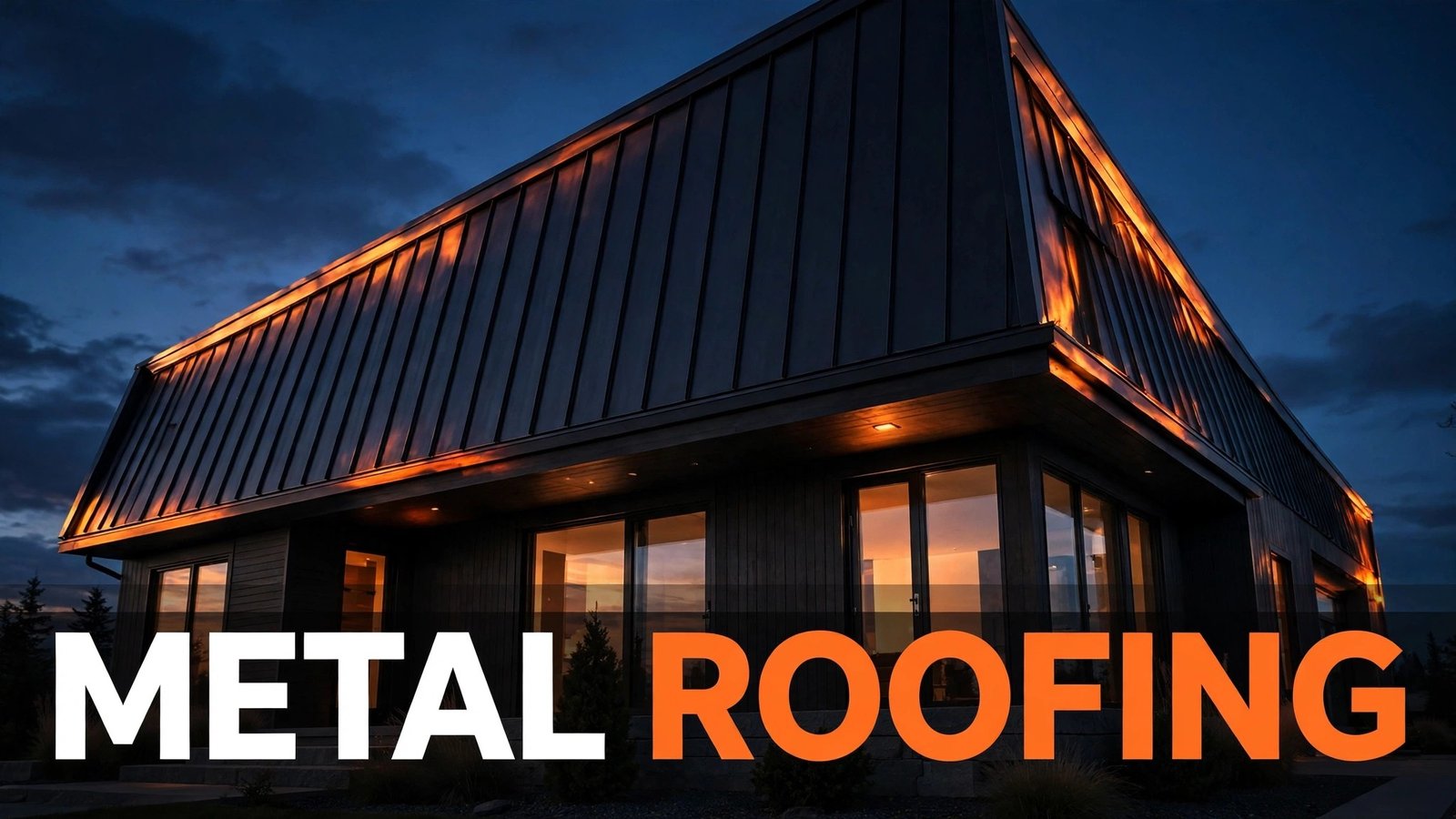
Metal Roofing vs Asphalt Shingles: The Head-to-Head Table
| Factor | Metal roofing | Architectural asphalt shingles |
|---|---|---|
| Installed cost per square (100 sq ft) | $800–$1,600 standing seam; $275–$470 screw-down panels | $500–$800 |
| Installed cost, 2,000 sq ft roof | $18,000–$35,000+ | $10,000–$16,000 |
| Lifespan | 40–70 years (standing seam) | 20–30 years |
| Weight per square | 50–150 lb | 240–340 lb |
| Fire rating | Class A, non-combustible | Class A (with treatment) |
| Snow shedding | Excellent — snow slides off | Poor — snow sits and melts in place |
| Energy performance | Reflects solar heat; up to 40% lower cooling costs in hot climates (Metal Roofing Alliance) | Absorbs heat |
| Maintenance | $50–$150/year (fastener checks, reseal) | $150–$400/year (inspections, repairs) |
| Resale | Strong for long-hold buyers; some buyers dislike the look | Neutral — the default expectation |
The trade-off is plain: metal roofing wins on durability and loses on upfront price. The honest question is not “which roof is better” but “will I own this house long enough for the better roof to pay for itself?” At a 40-year horizon, metal usually wins; at a 10-year horizon, shingles win. Lower roof repair costs over the roof’s life are part of why the long horizon favours metal.
How Much Does a Metal Roof Cost?
Roofing is priced by the square — one square is 100 square feet. A typical 2,000 sq ft roof is about 20 squares, but pitch and complexity add surface, so your quote may show 22–25. Check the square count before comparing prices; a cheap per-square price on an inflated count is no bargain.
| Metal roofing system | Installed cost per square | Installed cost per sq ft | Expected lifespan |
|---|---|---|---|
| Screw-down (exposed fastener) steel panels | $275–$470 | $2.75–$4.70 | 30–40 years |
| Metal shingles (steel or aluminium) | $600–$1,400 | $6–$14 | 40–50 years |
| Standing seam steel | $800–$1,600 | $8–$16 | 40–70 years |
| Standing seam aluminium | $1,000–$1,800 | $10–$18 | 50–70 years |
| Copper or zinc | $1,500–$2,500+ | $15–$25+ | 70–100 years |
| Architectural asphalt shingles (for comparison) | $500–$800 | $5–$8 | 20–30 years |
Three costs hide inside those numbers: tear-off of the old roof ($1–$2 per sq ft); a high-temperature synthetic underlayment, which adds $0.50–$1 per sq ft over standard felt and is the most commonly skipped item; and snow guards ($500–$1,500), which stop a sheet of snow sliding off in one slab onto a walkway or car and are often left off the first quote entirely.
Which Metal Roofing System Fits Your House?
Start from your situation, not from the product brochure. Each row below is a common homeowner situation, the system that fits it, and the reason.
| Your situation | Best metal roofing system | Why |
|---|---|---|
| Tight budget, simple gable roof, plan to stay 20+ years | Screw-down steel panels | Lowest installed cost; fastener checks are manageable on a simple roof |
| Suburban home, want the look of shingles or slate | Metal shingles | Curb appeal of a traditional roof with a 40–50 year life |
| Forever home, steep or complex roof | Standing seam steel | Hidden fasteners mean nothing to reseal; best weather performance |
| Coastal home, salt air | Standing seam aluminium | Aluminium does not rust; steel needs a premium coating to survive salt |
| Snow country, steep pitch | Standing seam + snow guards | Snow sheds fast; guards stop the avalanche onto the driveway |
| Historic home, budget is not the constraint | Copper or zinc | 70–100 year life; develops a patina instead of failing |
| Moving within 10 years | None — choose architectural shingles | You pay the metal premium and the buyer gets the lifespan |
If a contractor quotes only one system without asking how long you will stay, that is a sales pitch, not a recommendation — especially when the job is a full roof replacement.
The Specs That Decide Whether Metal Roofing Lasts
A metal roof fails on details, not on the metal itself. Check these specifications on your quote — if any are missing, ask for them in writing.
| Spec | What to look for | Why it matters |
|---|---|---|
| Panel gauge | 26-gauge minimum for steel; 24-gauge is better | Thinner 29-gauge panels oil-can (visible waviness) and dent in hail |
| Coating | Kynar 500 / PVDF finish | Resists chalking and fading for 30+ years; cheap polyester coatings fade in a decade |
| Underlayment | High-temperature synthetic, rated for metal | Standard felt melts under hot metal; this is the roof’s second line of defence |
| Fasteners (screw-down systems) | Screws with EPDM washers, torqued — not crushed | An over-driven screw crushes the washer and leaks within a few years; an under-driven one backs out |
| Panel clips (standing seam) | Concealed clips that allow thermal movement | Metal expands and contracts with temperature; fixed panels buckle |
| Ventilation | Ridge vent + soffit intake, balanced | Trapped attic heat cooks the underlayment and voids warranties |
| Snow guards | At eaves above entries and driveways | Without them, a whole winter’s snow can slide off in one slab |
The detail only someone who has stood on one of these roofs would know: never walk on the ribs of a standing seam panel — step only in the flat pan between seams, in soft-soled shoes. And chalk-line your first panel before a single screw goes in: a panel that starts 1/4 inch out of square is an inch out by the far eave, and every panel after it follows the mistake.
DIY vs Pro: What a Metal Roof Job Really Costs
| DIY (screw-down panels only) | Professional install | |
|---|---|---|
| Materials (20 squares) | $5,500–$9,400 | Included in quote |
| Labour | Your weekends (3–5 days for a simple roof) | $8,000–$16,000 |
| Tools (rental) | $300–$600 (metal shear, screw gun, safety gear) | Included |
| Underlayment + trim + fasteners | $1,500–$3,000 | Included |
| Total | $7,300–$13,000 | $18,000–$35,000+ |
Be blunt about this: standing seam metal roofing is not a DIY job. The panels are custom-cut to your roof’s length, the seams are crimped with a machine, and one bad seam leaks for the life of the roof. Screw-down panels on a simple single-storey gable roof are the only metal a skilled DIYer should attempt — and even then, only with a fall-arrest harness and a dry, windless forecast. Everything else belongs to a crew that does metal every week.
When to Call a Pro — Stop Box
Stop and call a licensed roofer if any of these apply: a roof two storeys high or steeper than 8/12 pitch; a sagging, soft or rotted deck; asbestos-cement shingles under the old roof; structural changes such as skylights or chimney flashing rebuilds; or a local code that requires a licensed installer for the warranty to hold. A metal roof is a 50-year decision — the install is the wrong place to learn on the job.
Metal Roofing FAQs
How much does metal roofing cost?
A metal roof job typically runs $5–$16 per square foot installed, or $18,000–$35,000+ for a 2,000 sq ft home. Screw-down panels are cheapest at $275–$470 per square; standing seam steel runs $800–$1,600 per square. Compare quotes per square, and check the square count — pitch and complexity add surface area.
How long does a metal roof last?
Standing seam metal roofing lasts 40–70 years, metal shingles 40–50 years, and screw-down panels 30–40 years with fastener maintenance — roughly double the 20–30 year life of architectural asphalt shingles. The finish warranty (often 30–40 years) and the substrate warranty are separate — read both before you sign.
Is metal roofing louder in rain?
A properly installed metal roof is no louder than shingles. The noise myth comes from barn roofs with no deck, no underlayment and no insulation. On a house, the deck, underlayment and attic insulation absorb the sound. If your quote skips solid decking or uses thin underlayment, noise is a real risk — a specification problem, not a metal problem.
Does a metal roof get hot?
A metal roof can feel hot to the touch in direct sun, but it reflects solar heat instead of absorbing it, so the attic stays cooler than under dark shingles. Cool-rated metalwith reflective pigment can cut cooling costs by up to 40% in hot climates — a white or light-coloured roof runs far cooler than a dark one.
Is metal roofing worth it vs shingles?
Metal roofing is worth it if you will own the house 20 years or more, because you avoid at least one full shingle replacement. The breakeven point is usually around 18–25 years. If you will move within 10 years, shingles are the better financial choice — you will not own the roof long enough to recover the premium.
Final Thoughts
Metal roofing is the best roof you can buy and the easiest roof to overpay for. The material is honest — 40 to 70 years of service, Class A fire resistance, snow that slides off instead of sitting — but the quote is where the money is won or lost. Check the system against your ownership horizon, check the gauge, coating and underlayment on the quote, and get a second quote from a crew that installs metal every week, not once a season. If the numbers work for a 20-year stay, sign it; if they don’t, architectural shingles are a fine roof.
A properly installed metal roof also makes a future roof leak far less likely — and if one ever appears, knowing how to fix a roof leak quickly limits the damage.