Sagging gutters are one of those problems that start small and end expensive. If your gutters are drooping, bowing, or pulling away from the fascia, they cannot move rainwater where it needs to go — and that water ends up in your foundation, siding, and landscaping. The good news is that learning how to fix sagging gutters is well within the reach of a handy homeowner, and most repairs take a single afternoon.
In this guide, you will learn how to fix sagging gutters step by step — diagnosing the cause, resetting the slope, replacing failed hangers, and knowing when the gutter is too far gone to save. Follow these ten proven steps.
Table of Contents
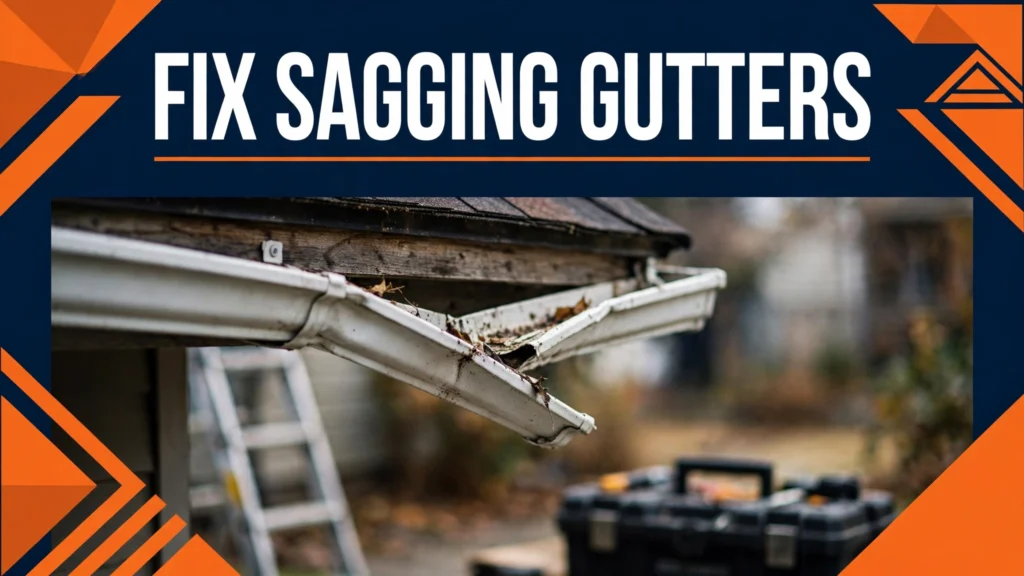
Why Gutters Sag: Know the Cause Before You Fix Sagging Gutters
Before you grab a ladder, it pays to understand what is actually going wrong. When you know how to fix sagging gutters properly, you treat the cause, not just the symptom — and the repair lasts for years instead of months.
1. Clogged gutters full of debris. This is the number-one cause. Leaves, twigs, shingle grit, and trapped water add enormous weight to a gutter run. A single gallon of water weighs more than eight pounds — a clogged gutter can easily carry hundreds of pounds it was never designed to hold, and the hangers slowly give way.
2. Loose or failed hangers. Old spike-and-ferrule fasteners work loose over time as wood expands and contracts with the seasons. Once one hanger fails, the load shifts to its neighbors, and a chain reaction of sagging begins. Replacing these fasteners is the core of how to fix sagging gutters for good.
3. Incorrect slope (pitch). Gutters need a slope of about 1/4 inch for every 10 feet of run, falling toward the downspout. If a gutter was installed level — or the pitch reversed over the years — water ponds in the low spots and drags that section down.
4. Rotted fascia board. Gutters anchor to the fascia, and if that board has rotted from years of overflow and moisture, no fastener will hold. Any gutter repair that skips a fascia check is doomed to fail again.
5. Heavy snow and ice loads. In northern climates, ice dams and snowpack put tremendous downward force on gutters. Hangers spaced too far apart simply cannot handle it.
Step 1: Gather Your Tools and Materials
Having the right tools on hand keeps you off the ladder as much as possible. Lay everything out before you climb up.
Tools you will need: a sturdy extension ladder, cordless drill with a nut-driver or hex-head bit, hammer, pry bar, 4-foot level, tape measure, chalk line, gutter scoop or small trowel, garden hose, work gloves, and safety glasses. A ladder standoff is strongly recommended to protect the gutter.
Materials: hidden gutter hangers (also called one-piece fascia clips), 1-1/4 inch pan-head aluminum screws, gutter sealant (silicone-based), replacement gutter sections if any runs are cracked, and a length of 2×4 for bracing. Plan on a hanger every 24 inches, and every 16 inches in snow country.
Step 2: Clean the Gutters Thoroughly
Do not try to rehang a gutter that is still full of muck. Scoop out every leaf, twig, and handful of sludge, then flush the run with a garden hose and clear the downspouts. This removes the weight that caused the sag and lets you see the true shape of the gutter — cleaning always comes first when you learn how to fix sagging gutters.
Step 3: Inspect the Fascia Board
With the gutter empty, press firmly on the fascia board behind every sagging section. Soft, spongy, or visibly rotted wood must be cut out and replaced before you reattach anything — new hangers screwed into rot will pull out within months. This fascia check is one of the most-skipped parts of how to fix sagging gutters, and it is what separates a lasting repair from a repeat visit.
Step 4: Remove the Failed Fasteners
Old spike-and-ferrule hangers are the usual suspects in any guide on how to fix sagging gutters. Wedge a short length of 2×4 inside the gutter to brace it, then use a pry bar and hammer to pull the old spikes and ferrules free. Discard any bent, rusted, or undersized hangers — you will not be reusing them.
Step 5: Check and Reset the Gutter Slope (Key to Fixing Sagging Gutters)
Now that the gutter hangs loose, it is time to dial in the pitch. A proper slope — 1/4 inch of drop for every 10 feet toward the downspout — is the single most important factor in how to fix sagging gutters so they stay fixed. Too little slope and water ponds; too much and it looks wrong and overshoots the gutter at the downspout end.
Snap a chalk line on the fascia marking your high point (the end farthest from the downspout) and your low point, then hold a level against it to confirm the drop. Temporarily secure the gutter with one screw driven through the rear center so it stays put while you work.
Step 6: Mark Hanger Locations
Hidden hangers hold best when they bite into solid wood — ideally into a rafter tail, not just the fascia. Look for the rows of nail heads in the fascia, which reveal rafter positions (typically 16 or 24 inches apart). Mark each location with a pencil. Marking rafter locations is a small detail that makes a big difference in how to fix sagging gutters so they stay fixed for years.
Step 7: Install New Hidden Hangers
Slide each one-piece hidden hanger onto the back lip of the gutter, hook it under the front lip, and lift the gutter slightly to take the sag out of that section. This hanger technique is the professional answer to how to fix sagging gutters without removing the whole run. Drive the hanger screw through the fascia and into the rafter tail with your cordless drill and hex-head bit. Drive screws snug but not so tight that they deform the gutter — over-tightening warps the back wall and creates new low spots.
Step 8: Seal Old Holes and Joints
Every old spike hole is a future leak. Squeeze a dab of silicone gutter sealant into each abandoned fastener hole and smooth it flat with your finger. Sealing old holes is the most-skipped part of how to fix sagging gutters — do not skip it.
Step 9: Test With Water
Before you call the job done, run the garden hose at the high end of the gutter and watch the water travel. It should flow steadily toward the downspout with no standing pools. If water lingers in a section, that spot still needs a hanger adjustment or a small slope correction — much easier to fix now than after the next rainstorm. A water test is how you prove your method for how to fix sagging gutters actually worked.
Step 10: Prevent Future Sagging
The best way to learn how to fix sagging gutters is to make sure you rarely need to. Schedule gutter cleaning at least twice a year — spring and late fall — or more often if you have overhanging trees. Consider installing gutter guards to keep debris out and cut the weight load dramatically; a proper guard system pairs beautifully with a freshly rehung gutter. For the full walkthrough on choosing and installing them, see our guide on how to install gutter guards.
When to Repair vs. Replace Your Gutters
If you are deciding how to fix sagging gutters on a budget, repair makes sense when the sag is limited to a few sections, the metal is intact, and the fascia is sound. But if your gutters are rusting through, cracking at multiple seams, sagging along their entire length, or older than 20 years, replacement is usually the smarter investment. As a rule of thumb: if the repair bill approaches half the cost of new gutters, replace.
Cost of Fixing Sagging Gutters
DIY gutter repair is one of the cheapest fixes in home maintenance. A box of hidden hangers runs about $15 to $30, gutter sealant under $10, and replacement screws a few dollars more — most homeowners spend under $75 total. Hiring a professional to rehang and realign a gutter run typically costs between $150 and $400 depending on your market and how much ladder work is involved. Either way, knowing how to fix sagging gutters beats the thousands a foundation crack or rotted fascia can cost. For authoritative detail on professional repair methods, This Old House has an excellent guide to fixing sagging gutters worth bookmarking.
Frequently Asked Questions About How to Fix Sagging Gutters
How much does it cost to fix sagging gutters?
DIY repair usually costs $25 to $75 in materials — mainly hidden hangers and gutter sealant. Professional rehanging typically runs $150 to $400, depending on roof height and sag extent.
Why do my gutters keep sagging after I fix them?
Recurring sag almost always means the root cause was missed: rotted fascia behind the hangers, hangers spaced too far apart, or an incorrect slope that lets water pond.
Can I fix sagging gutters without removing them?
Yes — most sagging gutter repairs are done in place. You clean the gutter, remove the failed fasteners, install new hidden hangers, and reset the slope without ever taking the gutter off the house. That is how to fix sagging gutters in the least invasive way possible. Full removal is only needed if sections must be replaced.
How far apart should gutter hangers be spaced?
Space hidden hangers no more than 24 inches apart in mild climates, and every 16 inches in areas with heavy snow or ice. Aligning hangers with rafter tails gives the screws something solid to bite into.
Do gutter guards prevent sagging?
They help a great deal. Guards keep leaves and debris out, which removes the excess weight that causes most sagging. They do not fix already-failed hangers or incorrect slope, so repair the gutter first, then add guards as prevention.
Final Thoughts
Knowing how to fix sagging gutters puts one of the most common — and most neglected — home exterior repairs firmly in your hands. Clean the system, check the fascia, replace failed fasteners with hidden hangers, reset the slope to a proper 1/4 inch per 10 feet, and seal every old hole. Your gutters will move water the way they were designed to, and your foundation, siding, and landscaping will thank you. If your roofline needs attention beyond the gutters, our guides on sealing roof flashing and installing a ridge vent are good next steps.