Clogged gutters are one of the most expensive problems a homeowner can ignore — and one of the cheapest to prevent. A single overflowing gutter can send hundreds of gallons of rainwater spilling against your foundation, leading to basement flooding, cracked concrete, and rotted fascia boards. Foundation repairs alone can run $5,000 or more, while learning how to clean gutters yourself costs almost nothing and takes just a couple of hours twice a year. This guide shows you exactly how to clean gutters the right way — safely, thoroughly, and without paying a pro $150–$300 per visit.
Table of Contents
Why Gutter Cleaning Matters
Your gutters collect rainwater running off the roof and carry it away from your house through the downspouts. When leaves, twigs, and shingle grit pile up, water spills over the sides and pools around your foundation. In winter, trapped debris freezes into ice dams that push under your shingles and cause roof leaks — the same kind of leak our guide on how to fix a roof leak helps you repair. It’s also why so many homeowners look up how to clean gutters every fall — the damage prevention is real.
A gutter full of wet leaves and standing water can weigh several hundred pounds, pulling screws loose and warping the run. Homeowners who learn how to clean gutters on schedule avoid the overflow problem entirely. Cleaning them out is basic home maintenance every US homeowner should master, right alongside winterizing your house before the cold season.
How Often Should You Clean Your Gutters?
Twice a year is the standard: once in late spring and once in late fall after the leaves drop. But your situation may demand more — homes with heavy tree coverage may need cleaning 3–4 times per year, and pine needles mat together and clog faster than broad leaves. Always clean after big storms, since wind can dump a season’s worth of debris in one afternoon. And never skip the fall cleaning: knowing how to clean gutters before winter prevents ice dams and lets meltwater drain properly in spring. More than any single technique, keeping to this schedule is what makes the whole routine effective.
Tools You’ll Need
Gather everything before you climb the ladder — coming down mid-job is where accidents happen:
- Sturdy extension ladder reaching ~3 feet above the gutter line
- Ladder stabilizer or standoff arms (rests the ladder on the roof, not the gutter)
- Heavy-duty work gloves and safety glasses
- Gutter scoop or small plastic trowel (plastic won’t scratch the gutter coating)
- Bucket with a handle, or one that hooks onto the ladder
- Garden hose with a spray nozzle
- Plumber’s snake for downspouts
- Ground tarp or trash bags for debris
Total cost: $40–$80 if you need the ladder accessories — most of it reusable for years. If this is your first time following a guide on how to clean gutters, don’t skimp on the stabilizer and gloves; they’re the two items that keep the job safe.
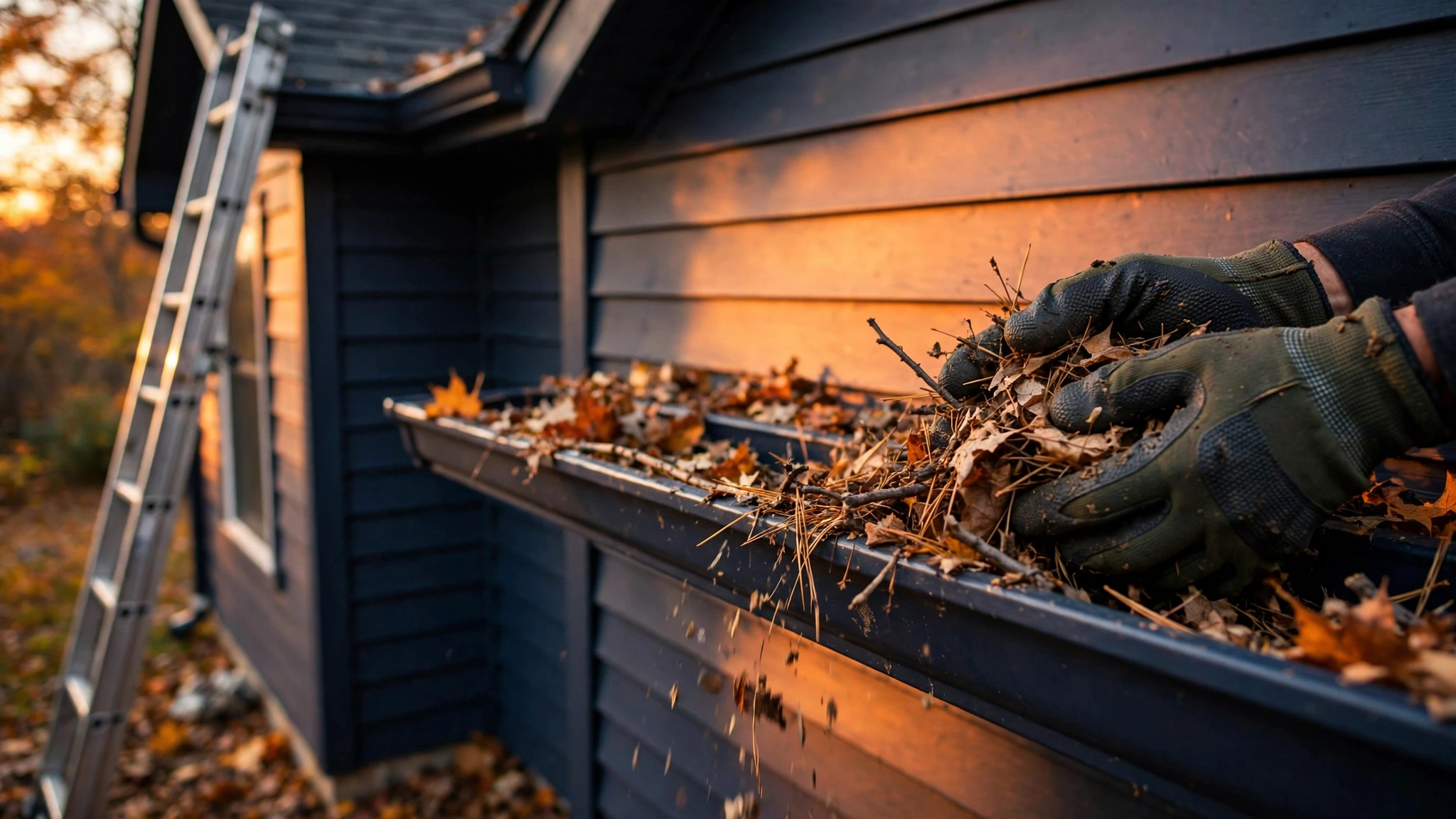
Ladder Safety First
More DIY injuries come from ladder falls than almost anything else, so safety is the first part of learning how to clean gutters. Never stand on the top three rungs, keep your belt buckle between the rails, and set the ladder on firm, level ground — never mulch or loose gravel. Use a stabilizer so the ladder rests against the roof, not the fragile gutter edge. Stay well clear of power lines; if gutters run near service lines, hire a professional. Don’t work in wet weather, and have someone hold the ladder or be present. If your home is two stories and you’re uncomfortable at height, the $150–$300 a pro charges beats an emergency room visit.
How to Clean Gutters: 10 Proven Steps
Step 1: Set Up the Ladder
Extend the ladder to reach about 3 feet above the gutter line, at roughly one foot out from the wall for every four feet of height. Attach the stabilizer arms so the ladder bears against the roof. Hook your bucket within reach. Plan to move the ladder along the gutter line rather than overreaching from one spot — that habit prevents most falls.
Step 2: Start at the Downspout End
Begin scooping near a downspout and work away from it. This is the correct direction for how to clean gutters: you clear the most clog-prone area first and avoid pushing debris into sections you’ve already cleaned. Note which downspouts seem blocked — you’ll flush them separately later.
Step 3: Scoop Out the Debris
Wearing gloves, use the scoop to pull leaves, twigs, and grit out of the gutter, dropping it into the bucket. Don’t chase every last bit on this pass; you’re removing the bulk. Expect this to be the most physical part of learning how to clean gutters, especially in fall when debris is wet and heavy.
Step 4: Bag Debris as You Go
Empty your bucket into trash bags or onto the ground tarp regularly. Wet gutter debris is surprisingly heavy, and dumping a full bucket from a ladder is unsafe. Work in 4–6 foot sections: scoop, empty, move the ladder. It’s slower, but it’s the method professional gutter cleaners actually use.
Step 5: Check Slope and Hardware
With the bulk gone, look down the gutter line from one end. It should slope gently — about 1/4 inch per 10 feet — toward the downspouts. Sagging sections mean loosened hangers; tighten or replace them with screws (not nails). A gutter that doesn’t slope won’t drain even when perfectly clean, which is why some homeowners who already know how to clean gutters keep recleaning when the real problem is pitch.
Step 6: Scrub the Gutter Interior
Use a stiff brush and hose to scrub the gutter bottom and sides, removing the thin layer of dirt and shingle grit that scooping misses. This grit packs into a concrete-like layer over time and causes slow drainage. Black streaks on the gutter exterior can be cleaned now too — water, white vinegar, and a soft brush usually remove them.
Step 7: Flush the Downspouts
Run your hose full-blast into the top of each downspout. If water backs up, it’s clogged: dislodge the blockage with a plumber’s snake from the bottom, or disconnect the downspout at the elbow and clear it by hand. One clogged downspout can render an entire clean gutter useless, so don’t skip this step. Downspouts should extend 4–6 feet from the foundation to move water truly away from the house.
Step 8: Flush the Full Gutter Run
Starting at the end farthest from the downspout, run water through the entire length and watch it flow. This final flush is what separates people who know how to clean gutters properly from those who only scoop. You’re confirming the debris is gone, the slope carries water to the downspouts, and there are no leaks at seams or end caps. Mark drip spots with painter’s tape and seal them once dry — a tube of gutter sealant handles most small leaks in minutes.
Step 9: Inspect Fascia, Soffits, and Roof Edges
With the gutter empty, check what’s behind it. Soft, crumbly fascia wood or peeling paint signals rot that needs repair before it spreads — water-damaged wood is the same enemy you fight indoors when you repair drywall holes caused by interior leaks. Check the shingle edge above the gutter for lifted or cracked shingles. This Old House’s gutter cleaning guide is an excellent companion resource with detailed visuals for these inspection steps.
Step 10: Consider Gutter Guards
Mesh or screen gutter guards reduce debris buildup dramatically — they won’t eliminate cleaning forever, but they can stretch it to once a year. Avoid foam inserts in cold climates (they trap ice). Quality guards run $7–$12 per foot installed, making them a strong investment for heavily wooded lots. Even with guards, the basics of how to clean gutters stay useful, since guards themselves need occasional brushing off.
Mistakes to Avoid When You Learn How to Clean Gutters
- Reaching too far from the ladder — move the ladder instead. Overreaching causes most falls.
- Blasting a pressure washer at full power — it strips gutter coating and pushes debris under shingles. Use a garden hose.
- Ignoring the downspouts — the gutter is only half the system; a clean gutter with clogged downspouts still overflows.
- Leaning the ladder against the gutter — it dents aluminum gutters. Use stabilizer arms.
- Skipping the fall cleaning — going into winter with full gutters invites ice dams and costly roof damage.
Frequently Asked Questions
How long does it take to clean gutters?
A single-story home with 150 feet of gutters takes 1–2 hours; a two-story home with heavy tree coverage can take 3–4 hours. Budget extra time on your first attempt — learning how to clean gutters gets faster each time you do it.
Can I clean gutters from the ground?
Telescoping wands and gutter vacuums handle light debris and maintenance rinses, but they can’t check hardware or slope and leave downspout clogs unaddressed. For a homeowner learning how to clean gutters from scratch, hands-on ladder work remains the gold standard for a real twice-a-year cleaning.
What is the best time of year to clean gutters?
Late fall, after most leaves drop, is the single most important cleaning. Late spring is second — it clears seed pods and storm debris before summer downpours. If you can only do it once a year, make it fall.
Are gutter guards worth the money?
For homes with heavy tree coverage, yes — they cut cleaning frequency dramatically. But no guard is truly maintenance-free; budget for a light annual check. Get multiple quotes, since pricing varies widely.
How much does professional gutter cleaning cost?
Most US homeowners pay $150–$300 per cleaning, with two-story homes and heavy debris at the higher end. Homeowners who learn how to clean gutters themselves pocket that savings twice a year. Many companies offer spring-and-fall maintenance plans at a discount.
Final Thoughts
Learning how to clean gutters is one of the highest-value skills in home maintenance — a few hours and almost no money each year protects your roof, siding, and foundation from thousands of dollars in damage. Do it twice a year, respect ladder safety, and never skip the downspouts. If you run into bigger issues — rotted fascia, a persistent leak, or drainage problems cleaning doesn’t solve — explore our other guides or reach out through our contact page.
Pingback: How to Clean HVAC Condensate Drain: 8 Proven Steps - Fixora Works
Pingback: How to Clean Dryer Vent: 9 Proven Steps for Fire Safety - Fixora Works
Pingback: How to Repair Concrete Cracks: 8 Proven Steps for a Lasting Fix
Pingback: How to Install Gutter Guards: 9 Easy Steps for Clog-Free Gutters
Pingback: How to Maintain a Sump Pump: 9 Proven Tips for a Flood-Free Basement
Pingback: How to Use a Pressure Washer: 9 Proven Steps for a Spotless Home
Pingback: How to Prevent Ice Dams on Roof: 9 Proven Steps for a Leak-Free Winter