Water dripping from a gutter seam, a run sagging away from the fascia, a downspout overflowing in every storm — gutter repair is a job homeowners put off until a stained wall or a wet basement forces the issue. The good news: most gutter problems are small, local failures, and a gutter repair you do yourself usually costs $10 to $50 in parts and takes one afternoon. You need the right diagnosis, the right sealant, and a ladder you trust.
Before you buy anything, watch the gutter during rain, or run a garden hose into it. Where the water escapes tells you exactly what failed.
Table of Contents
Diagnose First: What’s Actually Wrong With Your Gutters
Every successful gutter repair starts with naming the failure. A drip at a seam, a belly mid-run, and water over the front edge look similar from the ground, but each has a different cause and fix.
| Symptom | Likely cause | Fix | Difficulty |
|---|---|---|---|
| Drip at a seam or end cap | Old sealant dried and cracked | Clean, reseal, rivet if needed | Easy, 30–60 min |
| Sagging or pulling away | Spikes or hangers worked loose; fascia soft | Gutter screws or hidden hangers | Moderate, 1–2 hrs |
| Water pooling mid-run | Wrong pitch; hangers too far apart | Re-pitch to 1/4 in per 10 ft | Moderate, 1–2 hrs |
| Small holes or pinholes | Rust on steel; corrosion on thin aluminum | Wire-brush, patch + sealant | Easy, 30 min |
| Water over the front edge | Clogged gutter or downspout | Clean thoroughly; check downspout | Easy, 1 hr |
Clean the gutter completely before diagnosing anything — half of all “leaks” are just clogs forcing water over the edge. Check the fascia behind a sagging section with a screwdriver tip: soft wood means no new hanger will hold.
Gutter Repair Cost: DIY vs Pro
A single gutter repair is cheap. Ignoring it is what gets expensive: water running down siding rots fascia and erodes soil at the foundation.
| Repair | DIY parts cost | Pro cost | Your time |
|---|---|---|---|
| Reseal one leaking seam | $8–$20 (one tube of sealant) | $100–$250 | 30–60 min |
| Patch a small hole | $10–$25 (patch kit + sealant) | $150–$300 | 30 min |
| Re-hang a sagging 10-ft section | $15–$40 (hangers + screws) | $150–$350 | 1–2 hrs |
| Full gutter replacement | Not a DIY job for most homes | $6–$14 per ft installed | — |
This Old House puts the typical gutter repair range at $25 to $200. A tube of quality sealant costs under $15 and covers several seams — the best-value gutter repair in the house.
Tools and Materials You’ll Need
- Sturdy extension ladder with a standoff, plus a helper to foot it
- Work gloves, safety glasses, non-slip shoes
- Garden hose, stiff brush, plastic gutter scoop
- Cordless drill/driver; 7-in hex-head gutter screws with ferrules, or hidden hangers
- Gutter sealant — flexible polyurethane or butyl, exterior-rated; caulk gun
- Utility knife, wire brush, aluminum flashing patch, tin snips
- Short pan-head screws and a pop-rivet gun
Use screws, not nails, for re-hanging — a nail only grips by friction, while a 7-inch gutter screw bites into the rafter tail and stays put.
Gutter guards cut cleaning time — see our guide to installing gutter guards.
How to Fix a Leaking Gutter Seam or End Cap
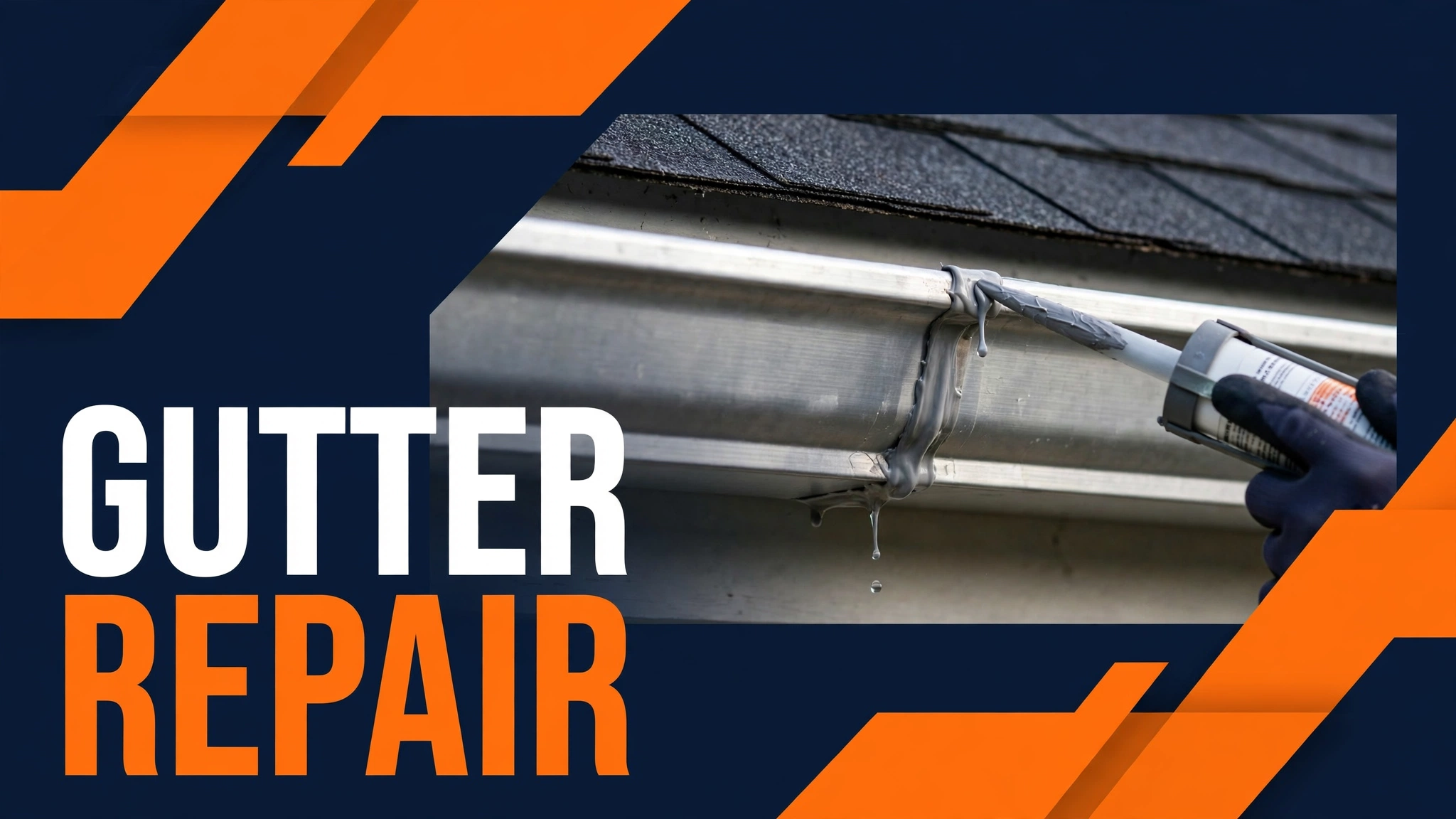
Leaking seams are the most common gutter repair, and the fix is straightforward if the joint is clean and dry.
- Clean and dry the joint. Scoop out debris, scrub the seam, flush with the hose, and let it dry completely — sealant will not stick to wet, dirty aluminum.
- Scrape out the old sealant. Use a utility knife to remove cracked sealant from inside the seam, back to bare metal.
- Apply new sealant. Run a continuous bead inside the seam and tool it smooth with a wet finger. Never seal from the outside only — water finds the inside gap.
- Rivet loose joints. If the sections move, drill two 1/8-in holes through the overlap, set stainless pop rivets with neoprene washers, and seal over the heads.
- Cure, then test. Most sealants need 24 hours. Run a hose into the gutter the next day and watch the seam for five minutes — if it stays dry, the gutter repair is done.
How to Fix Sagging Gutters
A sagging gutter is a fastener problem, not a gutter problem: the spikes have backed out of the fascia, or the hangers are spaced too far apart. For the full step-by-step, see our dedicated guide to fixing sagging gutters.
- Find the low spot. Sight along the gutter from the end and push gently — a spike that moves has lost its grip.
- Replace spikes one at a time. Pull the old spike and ferrule, then drive a 7-in gutter screw through the same hole into the rafter tail. Work one fastener at a time so the gutter stays in position.
- Add hidden hangers. Space hangers no more than 24 inches apart — 18 inches on long runs or in snow country. Slip a hidden hanger under the front lip, hook it over the back lip, and screw it into the fascia.
- Set the pitch. A gutter needs about 1/4 inch of drop per 10 feet toward the downspout. Snap a chalk line on the fascia and adjust the hangers until the slope is right.
- Check the fascia. If screws spin without biting, it is rotted — replace the fascia board first, then re-hang the gutter.
How to Patch a Hole or Rust Spot
Small holes are the easiest gutter repair of all — pinholes in thin aluminum or a rusted spot on galvanized steel do not need a new gutter section. A patch takes half an hour and lasts years if the surface is prepared properly.
- Clean to bare metal. Wire-brush the rust to clean metal around the hole, at least an inch in every direction. On galvanized steel, add zinc-rich primer so rust does not keep growing under the patch.
- Cut the patch. Cut aluminum flashing at least 2 inches larger than the hole in every direction, with rounded corners so they do not catch debris.
- Bed it in sealant. Spread sealant on the back of the patch, press it over the hole, and smooth the sealant that squeezes out.
- Rivet and seal the edges. Set two or three pop rivets through the patch, then run a bead of sealant around the entire edge. Let it cure 24 hours before the next rain if you can.
A hole bigger than a quarter, or several holes in one section, means replacing that 10-foot section instead — $30 to $80 in parts, about two hours.
How to Fix a Clogged or Split Downspout
A downspout that overflows at the top or leaks at a joint is a gutter repair with a simple cause: a clog at the elbow, or a section that has come loose.
- Clear the clog. Disconnect the bottom elbow, then run a hose up from the bottom — pressure from below pushes the clog out the top. A plumber’s snake works for stubborn blockages. Never use a pressure washer on a downspout; it can split seams.
- Refasten loose joints. Replace missing screws with short aluminum pan-head screws. Long screws poke into the pipe and catch leaves, which starts the next clog.
- Seal leaking joints. Clean the joint, apply sealant inside the connection, and refasten. A crushed or split elbow costs a few dollars and slides into place.
- Check the discharge. The downspout should send water at least 3 to 5 feet from the foundation, with an elbow and extension or into a buried drain.
Gutter Repair Specs Worth Knowing
These are the numbers that separate a gutter repair that lasts from one you repeat next spring.
| Spec | What to use | Why it matters |
|---|---|---|
| Gutter pitch | 1/4 in per 10 ft toward downspout | Too flat and water pools; too steep and it overshoots |
| Hanger spacing | Every 24 in max; 18 in in snow country | Wide spacing is the top cause of sagging |
| Gutter screws | 7-in hex-head screws with ferrules | Bite into the rafter tail; spikes work loose |
| Sealant | Flexible polyurethane or butyl | Rigid sealants crack as aluminum expands |
| Sealant cure time | 24 hours before heavy rain | Early testing washes uncured sealant out |
| Downspout discharge | 3–5 ft from the foundation | Water at the wall defeats the system |
When to Call a Pro — and When to Stop
Most gutter repair is safe DIY work on a single-story home with a stable ladder. Stop and call a professional gutter company when any of these apply: second-story work without a properly rated ladder and a helper; fascia rotted through; damage extending into the roof deck; three or more sections needing work at once; or a full re-pitch of a long run. A pro charges $100 to $350 for most single repairs — cheap insurance against a fall or a fascia you make worse.
Frequently Asked Questions About Gutter Repair
How much does gutter repair cost?
A single DIY gutter repair costs $10 to $50 in parts. A professional charges $100 to $350 for most single repairs, and $25 to $200 is the typical range This Old House cites.
Can I repair gutters myself?
Yes — most gutter repair is beginner-friendly on a single-story home with a stable ladder and a helper. Leave second-story work, rotted fascia, and full re-pitching to a pro.
How do I fix a leaking gutter joint?
Clean the joint to bare metal, let it dry, scrape out the old sealant, apply a bead of flexible gutter sealant inside the seam, and rivet the joint if the sections move. Cure 24 hours, then test with a hose for five minutes.
Why are my gutters sagging or pulling away?
The fasteners have failed — old spikes work loose, or hangers were spaced too far apart. Replace spikes one at a time with 7-inch gutter screws into the rafter tails, and add hidden hangers every 24 inches or less. Screws that spin without biting mean rotted fascia — replace it first.
When should gutters be replaced instead of repaired?
Replace when the gutter is past roughly 15 to 20 years old with problems in several places, when rust has eaten through multiple sections, when the same joint keeps opening after repeated reseals, or when the fascia behind it is rotted. One or two isolated problems on a younger gutter are a repair, not a replacement.
Final Thoughts
Gutter repair rewards the homeowner who diagnoses before buying. A $12 tube of sealant fixes a leaking seam for years — but only on a clean, dry joint. A handful of gutter screws fixes a sagging run — but only if the fascia behind it is solid. Clean the gutters twice a year and reseal a seam the first time it drips. Most gutters fail slowly, one small problem at a time — catching each one early keeps a $30 repair from becoming a $3,000 replacement.
Pingback: Gutter Replacement: When to Replace, What It Costs, and How to Choose the Right System